Homeowners should choose furnace repair vs replace based on the system's age and the cost of service; units over 15 years old or those requiring repairs exceeding half their value are best replaced. If a furnace is less than 10 years old and has a minor mechanical issue, a professional repair is typically the more cost effective solution for staying warm.
As the first Inland Empire cold snap approaches, nothing is more frustrating than a furnace that refuses to ignite or starts blowing lukewarm air. Many Moreno Valley homeowners face a difficult choice when their heating system falters. Do you invest in a costly repair, or is it time for a full replacement? Making the wrong decision can lead to wasted energy costs; worse, it can lead to a mid-winter breakdown that leaves your family in the cold. In this guide, we provide a practical framework for evaluating your system. You will learn about the 5000 Rule for calculating repair costs, the critical safety risks of cracked heat exchangers, and specific warning signs that your unit is reaching its end. We aim to help you make an informed, expert decision before the temperature drops further.
The First Cold Snap: Why Moreno Valley Residents Should Not Wait
Homeowners in Moreno Valley are well accustomed to the brutal heat of the Inland Empire summer, but the sudden temperature drops in late fall often catch residential systems off guard. While you might be focused on cooling for ten months of the year, the shift to heating demands a system that is clean and responsive. In Riverside County, high dust levels and the seasonal Santa Ana winds introduce significant debris into your HVAC components. This particulate matter settles on burners and clogs filters, creating a high-friction environment that can lead to immediate failure when the thermostat finally calls for heat.
Waiting until the first true chill to test your system is a gamble. A failing furnace rarely gives notice before it stops working entirely during a cold front. We recommend performing a dry run in early November to identify potential issues before emergency services are required. Testing the system now allows you to evaluate the furnace repair vs replace dilemma without the pressure of a freezing house. If you notice unusual odors or delayed ignition during this test, securing professional furnace repairs early can prevent a total breakdown. Early assessment ensures your home remains a reliable sanctuary as the high desert air begins to cool.
The 5000 Rule and the Math of Furnace Longevity
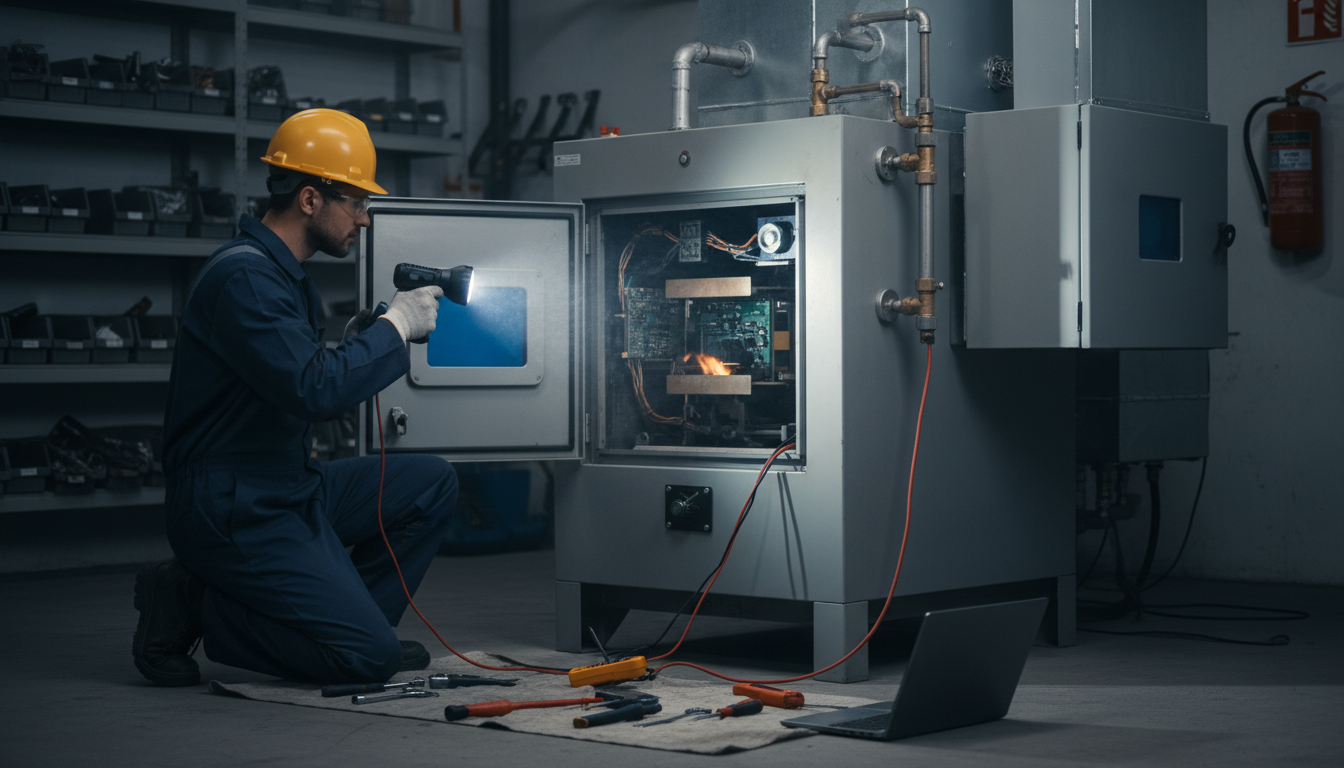
Deciding between a quick fix and a total system overhaul requires more than just a gut feeling. To remove the guesswork from the furnace repair vs replace dilemma, we utilize the $5,000 rule. This mathematical approach provides a clear threshold for investment by multiplying the age of the unit in years by the estimated cost of the repair. If the resulting number exceeds 5,000, the financial data suggests that the money is better spent on a new, high efficiency installation rather than an aging system.
Unit Age (Years) | Repair Cost | Calculation Total | Recommendation |
|---|---|---|---|
8 | $350 | 2,800 | Repair |
12 | $500 | 6,000 | Replace |
15 | $400 | 6,000 | Replace |
This method is often more reliable than the half-cost rule commonly cited in generic guides. The half-cost rule suggests replacing a unit only if the repair exceeds 50% of the price of a new furnace. However, this logic fails to account for the rapid decline in reliability as a system enters its second decade. A $600 repair on a 15 year old unit might be less than half the cost of a new system, but the $5,000 rule correctly identifies it as a poor investment because other components are likely near their breaking point.
Homeowners often ask exactly how old a furnace should be before replacement becomes inevitable. In the Moreno Valley climate, gas furnaces typically provide reliable service for 15 to 20 years. Once a unit crosses the 15 year threshold, the risk of critical component failure increases exponentially. Furthermore, older systems in Riverside County often struggle with obsolete parts that are difficult to source, leading to longer downtimes during cold snaps. When we perform comprehensive HVAC services, we evaluate these factors to ensure your decision is based on long term performance rather than a temporary patch.
Warning Signs: How Your Inland Empire Home Signals a Failure
Beyond the mathematical formulas, your home often provides physical indicators that a critical component is reaching its breaking point. Identifying these symptoms early allows you to address the furnace repair vs replace question before a total lockout occurs.
Listen for sounds that deviate from the standard operational hum. A high pitched, metal on metal screeching typically indicates a failing blower motor bearing or a shifted squirrel cage wheel. A localized thumping sound, especially upon startup, often signals a delayed ignition issue or a motor that has come off its mounts. These are not merely annoyances; they are signs of mechanical friction that will eventually lead to a motor burnout.
In larger Moreno Valley residential layouts, uneven heating is a primary symptom of a system in decline. If you notice that certain rooms remain cold while others are stifling, the furnace is likely losing its ability to move air effectively through the ductwork. This lack of consistency suggests that the blower is weak or the heat exchanger is no longer transferring heat efficiently.
Finally, keep a close eye on your utility statements. In light of recent Southern California Edison and SoCalGas rate hikes, an aging, inefficient furnace is significantly more expensive to operate now than it was just three years ago. As components wear down, the unit must work longer cycles to reach the set temperature, causing your energy consumption to skyrocket. If your bills have increased by more than 20% without a change in usage, your furnace is likely losing its AFUE rating. If you notice these performance dips, contact SC Pro Air today for a detailed system evaluation.
The Cracked Heat Exchanger: Safety Risks and Realities
While noises and high bills are concerning, a cracked heat exchanger is a critical safety failure that demands immediate action. The heat exchanger is a series of metal coils or chambers that separates the toxic products of combustion, like carbon monoxide and nitrogen dioxide, from the air circulated through your Moreno Valley home. When this component develops a crack, those lethal gases leak directly into your living space.
Because of the severe health risk, a cracked heat exchanger is considered a red tag offense. This means a technician is professionally obligated to shut the unit off and disable it until it is fixed or replaced. You cannot safely run a furnace with a cracked heat exchanger. Even a microscopic hairline fracture expands when the metal heats up; this allows toxic air to bypass the ventilation system and enter your bedrooms and living areas.
Identifying this issue requires looking for specific symptoms: - A yellow, flickering burner flame instead of a steady, crisp blue one. - The presence of soot or dark carbon staining inside or around the furnace cabinet. - A strong, pungent chemical odor that smells similar to formaldehyde. - Frequent, unexplained headaches or flu like symptoms among family members.
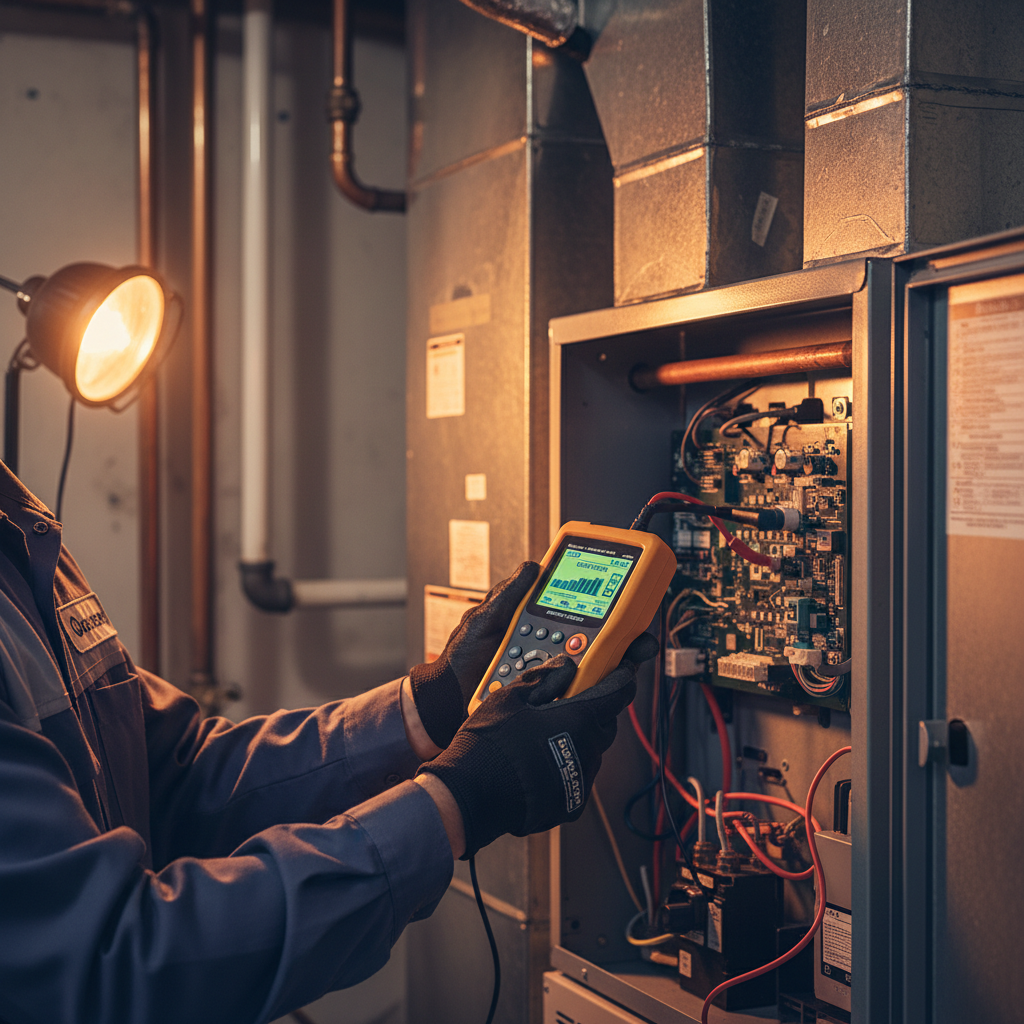
When weighing the furnace repair vs replace decision in this specific scenario, the cost of labor often dictates the outcome. Replacing a heat exchanger is one of the most labor intensive professional furnace repairs available. It involves disassembling nearly the entire unit to reach the core. If the furnace is no longer under a manufacturer warranty, the labor and part costs typically reach several thousand dollars. Given that heat exchanger failure usually occurs in units older than 12 years, investing that capital into a new system is the safer, more logical choice. Our comprehensive HVAC services include a thorough inspection of the combustion chamber to ensure your system’s structural integrity is intact before the winter season begins.
Repair vs Replace: A Comparison for Homeowners
Making the choice between a quick fix and a full system upgrade requires a look at both the current breakdown and the unit's history. While a simple component failure is often manageable; systemic issues in older Riverside County homes often point toward replacement as the more responsible financial path.
Decision Factor | Lean Toward Repair | Lean Toward Replacement |
|---|---|---|
System Age | Under 10 years old | 15+ years or obsolete components |
Issue Type | Clogged burner or minor electrical | Cracked heat exchanger or safety risk |
Reliability | First major repair in several years | Frequent pilot light or ignition failures |
Efficiency | Stable, predictable energy bills | Rapidly rising costs and low AFUE rating |
Choosing a modern high efficiency unit provides significant advantages in the California climate. These systems utilize advanced filtration and variable speed motors that better handle the fine particulate matter common in Moreno Valley. While the upfront cost is higher; the increased AFUE rating ensures you are not overpaying for gas during the coldest months. If your current system falls into the replacement category, contact SC Pro Air today to discuss how a new installation can improve your home's air quality and monthly overhead. For minor issues, our professional furnace repairs can quickly restore your comfort without the need for a full overhaul.
Pre Winter Furnace Maintenance Checklist

Establishing a proactive maintenance routine is the most effective way to tilt the furnace repair vs replace equation in your favor. Consistent care minimizes the mechanical strain that leads to expensive component failures. Use this checklist to stabilize your system before the temperatures drop.
Upgrade and Replace Your Air Filter: In Moreno Valley, the high concentration of fine particulate matter and seasonal dust requires a high quality filter. We recommend using a filter with a MERV 8 to 11 rating. While higher MERV ratings capture more dust, ratings above 12 can restrict airflow in older residential blowers, causing the heat exchanger to overheat.
Maintain Clear Environs: Clear all storage items, cleaning supplies, and debris within three feet of your furnace. This ensures adequate combustion air and prevents fire hazards, especially in cramped utility closets or garages.
Test Carbon Monoxide Detectors: Since a cracked heat exchanger is a silent threat, functional CO detectors are non negotiable. Test every unit in your home and replace batteries that are more than six months old.
Visual Inspection of Vents: Ensure all floor and wall registers are open and unobstructed by furniture. Closing too many vents increases static pressure, which can lead to premature motor failure.
If your system struggles to start or emits strange odors during these steps, contact SC Pro Air today. A professional tune up is often the difference between simple professional furnace repairs and an unexpected mid winter breakdown. Our comprehensive HVAC services are designed to identify small issues before they require a full system replacement. Taking these steps now ensures that your heating system operates at peak efficiency when the Inland Empire cold snap finally arrives.
Deciding between a quick repair and a full furnace replacement is a big choice for any Inland Empire homeowner. While age and repair costs are the primary factors to consider, your comfort during the cold snap remains the top priority. If you find yourself unsure about the best path forward, seeking a professional opinion can provide peace of mind. To learn more about our commitment to quality service and how we support local families, feel free to read more about us. We are here to help you stay warm.